With hundreds of millions of products and active customers, Amazon is the default destination for buyers ready to purchase. This massive consumer trust makes the Amazon Associates program one of the most effective affiliate marketing opportunities for content creators. Because your audience is already primed to buy, the heavy lifting of building brand authority is already done for you.
That said, let’s be direct: making money with the Amazon affiliate program rarely leads to overnight wealth. Commissions are modest, and unlike recurring SaaS affiliate programs, Amazon offers a one-time payout. However, when used correctly, it adds a reliable, passive income stream that scales directly with your traffic.
This guide covers everything from getting your account approved to the advanced strategies most affiliates overlook.
What Is the Amazon Associates Program?

Amazon Associates is Amazon’s official affiliate marketing program and one of the largest in the world. When you join, you receive unique tracking links you can place in your content. When someone clicks one of those links and completes a qualifying purchase on Amazon, you earn a commission on that sale.
The concept is simple: you recommend products, Amazon handles the selling, fulfillment, and customer service, and you collect a percentage. There is no inventory to manage, no customer support emails to answer, and no product creation involved. Your only job is to send qualified traffic to Amazon’s listings.
What makes this program especially accessible is that Amazon already converts visitors at a high rate. The platform has decades of consumer trust, fast shipping, easy returns, and a checkout process people know by heart. Your affiliate link automatically benefits from all of that infrastructure.
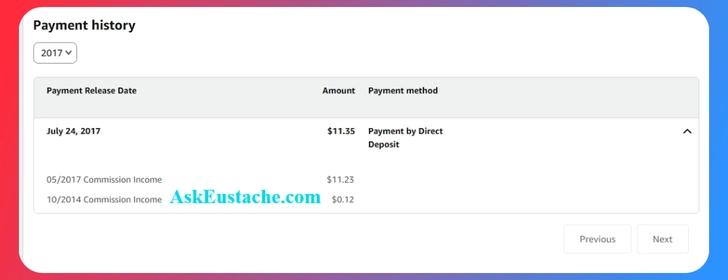
I made my first sale in October 2014, but because I was not promoting, I received my first payment in 2017. That’s why I’ll strive to give you actionable advice so you don’t waste time.
The program is free to join and open to bloggers, YouTubers, newsletter writers, social media creators, and virtually anyone with an online presence. As of 2026, Amazon Associates includes YouTubers, bloggers, and TikTok influencers, as well as online stores and product review websites, making it an accessible starting point for anyone looking to monetize their online presence.
How the Commission Structure Actually Works
This is where most beginners get surprised, and where most experienced affiliates leave money on the table.
Amazon affiliate commission rates range from 0% to 20%, depending on the product category. Top earners include Amazon Games at 20%, Luxury Beauty, Handmade, and Amazon Explore at 10%, and Amazon Haul at 7%. Mid-range categories like Apparel, Kitchen, and Books sit between 2% and 5%. Everyday categories like Home, Pets, and Sports pay 3%, while Electronics and Video Games drop to just 1% to 2%.
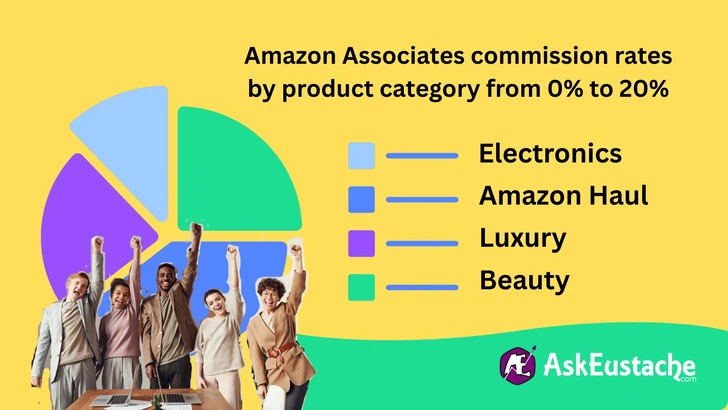
Most people gravitate toward reviewing electronics because those products are popular and easy to write about. The problem is that electronics typically pay only 1% to 2%. On a $500 laptop, that’s $5 to $10. You’d need thousands of monthly visitors converting at a solid rate just to earn a meaningful income from that category alone.
Categories like Furniture, Home, Lawn and Garden, and Outdoors saw their commission rates reduced from 8%–6% down to 3% in 2025. Digital Music, Physical Books, Kitchen, and Baby Products also experienced decreases of around 0.5% to 2%. In high-margin categories like Luxury Beauty, however, commission rates have remained stable at 10%.
The practical lesson is to choose your niche with commission rates in mind, not just search volume. A blog about kitchen gadgets at 4.5% will outperform a tech gadget blog at 2% with the same traffic, and kitchen content often converts better because people are closer to a buying decision when searching for that kind of product.
The Bounty Program: The Underused Income Layer
Beyond product commissions, Amazon runs a separate program that pays fixed fees for specific customer actions rather than purchases. The fixed amount for bounties ranges from $0.25 to $25.00 and is paid when a referred user signs up for an Amazon service or subscription, such as Amazon Prime, Audible, Kindle Unlimited, Amazon Music Unlimited, Kids+, baby registry, or wedding registry.
The most valuable bounties are the Amazon Prime free trial at $3 per signup, Audible Premium Plus at $25 per annual membership registration, and Kindle Unlimited at a fixed fee per signup. These bounties do not require a product purchase, which means a visitor who clicks through and signs up for a free trial earns you money even if they never buy anything on that visit.
If your audience includes readers, podcast listeners, or people new to Amazon’s subscription ecosystem, adding bounty-focused content to your site is one of the fastest ways to diversify your Amazon earnings without increasing your traffic.
Who Can Join Amazon Associates And How?
The program is broadly accessible, but Amazon does have standards. Your site, channel, or social presence needs to demonstrate that you create genuine content for a real audience. A brand-new blog with three posts and no traffic is unlikely to pass their review.
After approval, you must generate at least three qualifying sales within 180 days to keep your account active. This requirement catches a lot of beginners off guard. Many bloggers apply as soon as they launch, embed a few links, then wait months without generating their first sale, only to have their account closed before it ever really gets started.
The smarter approach is to wait until your site has at least 15 to 20 pieces of published content and is beginning to attract consistent organic traffic before applying. When you do apply, you’re in a much better position to hit those three sales quickly because you have existing readers and content that people are already engaging with.
If you are starting completely from scratch, you can still apply with a social media account or YouTube channel, provided you have an engaged audience. For the Amazon Influencer Program, though Amazon doesn’t specify a minimum follower threshold, having at least 1,000 followers generally increases approval chances.
One important nuance beginners miss: personal orders don’t count toward the three qualifying sales requirement. Only sales generated from external referrals through your unique affiliate links are considered. Do not attempt to buy through your own links to meet the threshold.
Step 1: Choose a Niche That Works for Amazon
The niche you choose will determine your long-term earning potential more than almost anything else. Two sites with identical traffic can generate wildly different Amazon incomes depending on the categories they promote.
Home and kitchen is a massive niche on Amazon. People are always looking for ways to upgrade their living spaces or improve their cooking. Items like knives, cutting boards, and kitchen gadgets need replacing over time, which often leads to repeat purchases. Smaller home and kitchen items are also perfect for impulse buys, which translates to higher conversion rates.
Other strong-performing categories for Amazon affiliates include physical books at 4.5% commission, pet supplies, fitness equipment, home office gear, and baby products. These categories share a common trait: people search for them with clear buying intent, and they don’t require weeks of research before committing to a purchase.
Categories to approach carefully include electronics, video games, and groceries. Electronics and video game commissions are low (1% to 2%), and grocery pays just 1%. Unless you’re driving very high volume or pairing Amazon with other monetization strategies, these categories will underperform relative to the effort required.
The health and wellness niche deserves special mention because it bridges multiple categories. A fitness blog can promote exercise equipment, supplements, and wellness books, capturing commissions across several tiers while building a cohesive audience.
Keep in mind that it is important to get started on the right foot. You can use the same Amazon Associates account to promote products on different sites or social accounts that you own, each of which has a different niche.
Step 2: Create Content That Actually Converts
Most beginner affiliates make the same mistake: they create informational content and drop affiliate links into it, then wonder why nobody clicks. Informational content answers questions but rarely converts. Buying-intent content is what drives Amazon commissions.
The content types that consistently generate Amazon affiliate income are product reviews, “best of” roundups, comparison articles, and problem-solving how-to guides that mention specific product recommendations. A post titled “How to organize a small kitchen” will convert better than “The history of kitchen organization” because readers searching for the former are actively looking for solutions, which often means products.
For product reviews, specificity builds trust. Readers can tell the difference between a generic rewrite of Amazon’s product description and a review that shows someone actually used the product. Even if you haven’t personally used every item you review, you can analyze real customer reviews, note recurring complaints and praises, and present that information honestly. The goal is to help someone make a confident decision, not just to get her land on Amazon.
Comparison content like “Nespresso vs Keurig: Which coffee maker is right for you?” captures buyers who have already narrowed their options and just need a final nudge. These articles tend to rank well because they target specific, high-intent search queries.
Step 3: Apply and Get Approved
Applying is straightforward through Amazon’s Associates Central at affiliate-program.amazon.com. You’ll provide your website URL, describe your content and audience, explain how you plan to drive traffic, and agree to the program’s operating agreement.
Amazon reviews your site during the application process. Having published content, clear navigation, an “About” page, and a privacy policy significantly improves your approval odds. Your site does not need to be large, but it does need to look like a real, actively maintained resource rather than a placeholder page.
One step many applicants skip: add your affiliate disclosure before you even start driving traffic. The required disclosure must be visible near any affiliate links and state your relationship with Amazon clearly. A line at the top of articles like “As an Amazon Associate, I earn from qualifying purchases” satisfies this requirement. This is not optional. Amazon requires that you state your relationship with them before the first affiliate link. If you skip this, you might generate clicks and even sales that later get disqualified.
After approval, you’ll generate your tracking IDs inside the Associates dashboard. Create separate tracking IDs for different content sections or traffic sources so you can analyze which pages and link placements are actually driving your earnings.
You won’t be able to delete tracking IDs. So, create only one or two to get started. For example, yourBusinessName-20 and yourYouTubeChannel-20.
Step 4: Understand the 24-Hour Cookie (and the 90-Day Cart Extension)
The single most important technical detail of the Amazon Associates program is the cookie duration, and it’s the thing most beginners don’t fully understand.
The Amazon affiliate cookie duration is exactly 24 hours. This means when someone clicks your Amazon affiliate link, you get exactly 24 hours for them to complete a purchase for you to earn a commission.
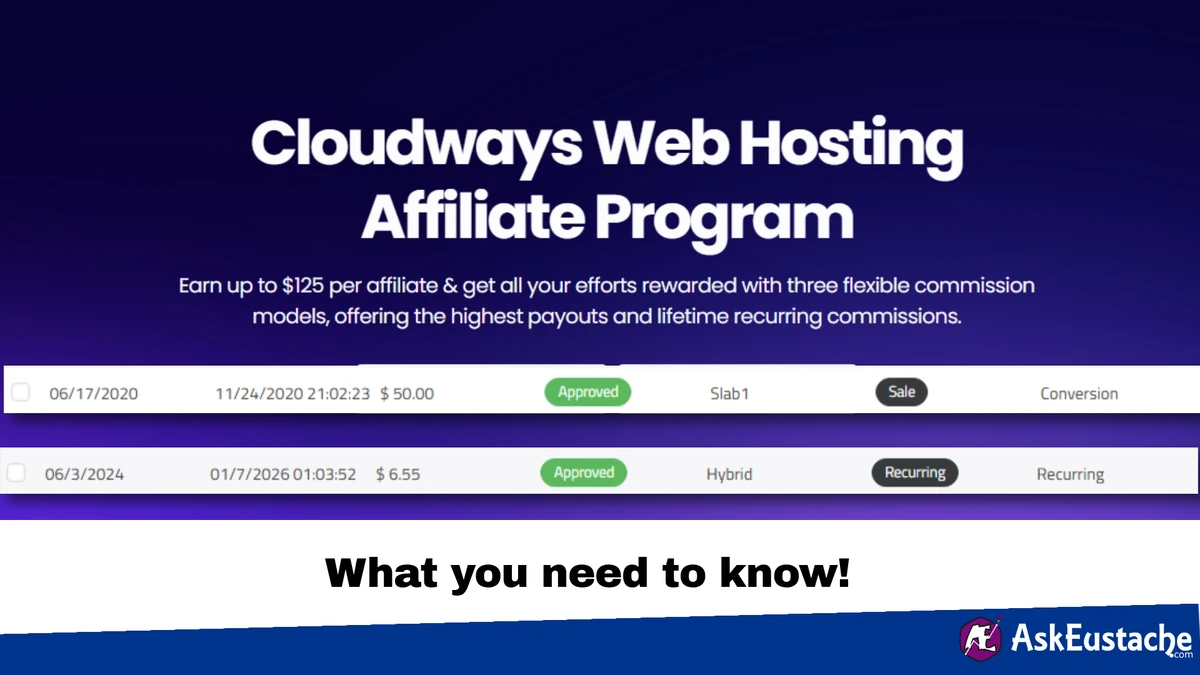
Compare this to programs like Cloudways’ affiliate program, which offer 90-day cookies, or many other SaaS affiliate programs that give you 30 to 90 days. Amazon’s window is tight, which is why targeting buying-intent traffic matters so much. Someone who clicks your link while actively searching for a product to buy right now is far more valuable than someone who clicks out of casual curiosity.
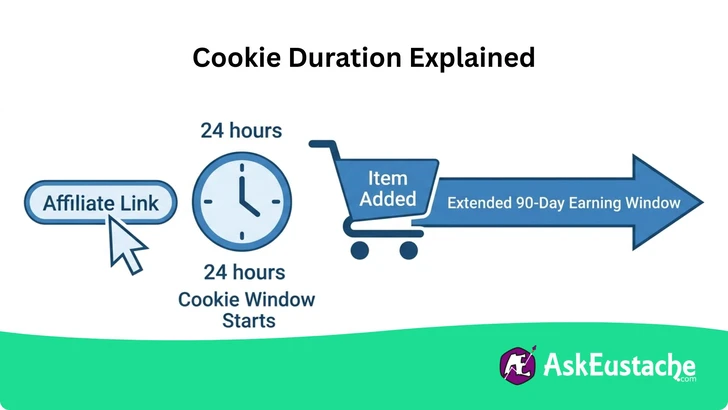
Here’s the less-known part that most guides leave out: if a visitor adds an item to their Amazon cart within that 24-hour window, the 24-hour cookie window itself is short, but the 90-day cart mechanism means that if a visitor adds your recommended item to their cart within those 24 hours, you still earn the commission even if they check out up to 90 days later.
This means a call to action like “add this to your cart now so you don’t forget it” is not just good copywriting — it’s a strategic move that extends your earning window significantly. Practical application: end your product recommendations with a clear, low-pressure prompt to add the item to their cart even if they’re not ready to buy immediately.
The other important nuance is that your commission applies to everything a visitor purchases during their session after clicking your link, not just the product you recommended. If someone clicks your link for a blender, then adds the blender plus a cookbook and a set of measuring cups to their cart, you earn commissions on all three items — even though you only recommended one.
Step 5: Place Links Strategically
Where you place your affiliate links matters almost as much as the content itself. Most beginners paste one link at the bottom of an article and wonder why their click-through rates are low.
High-converting link placement follows a simple principle: links belong where readers are most engaged and closest to a buying decision. In a product review, that means placing a link in the introduction (after your initial verdict), within the body of the review when discussing key features, and again in the conclusion with a clear recommendation.
For roundup articles featuring multiple products, each product section should contain at least one clearly formatted link, ideally a text link and a product image with an affiliate link attached. Amazon’s native shopping ads and product display widgets can also be embedded directly into content and tend to perform well when placed near relevant paragraphs rather than at the bottom of a page, where few readers ever scroll.
Avoid stuffing links everywhere. Too many affiliate links in a short piece of content signals desperation to both readers and search engines, and it can feel pushy. Three to five well-placed links in a 2,000-word article are usually more effective than twelve links crammed into every other paragraph.
Step 6: Drive Traffic to Your Content
Amazon’s program rewards traffic volume, but not all traffic is equal. Social media followers who click out of curiosity convert at a much lower rate than organic search visitors who arrive at your content with a specific question or buying intent.
SEO-focused content is the highest-leverage long-term traffic strategy for Amazon affiliates. A well-optimized review article that ranks in Google’s top five positions for a buying-intent keyword can generate commissions for years without additional promotion. This is the compounding asset that makes Amazon’s affiliate income worth building.
Pinterest works exceptionally well for Amazon affiliate content in the home, kitchen, fashion, beauty, and crafts categories because the platform’s users are actively looking for product ideas and inspiration. A well-designed pin linking to a roundup article can drive consistent traffic for months after it’s published.
Affiliates who focus on informational content with no purchasing relevance tend to earn little, while those who create review-based, comparison-based, or solution-oriented content earn significantly more.
Email marketing is the channel that I’ve seen consistently underused by Amazon affiliates. Historically, linking to Amazon from emails was forbidden, which is why. Now, I still recommend caution and link to your reviews or tools round-up. But your email subscribers already trust you, so it is easier to get them to buy from your trusted recommendations.
How Much Money Can You Realistically Make?
Let’s be honest about the numbers, because most articles either scare you with how little Amazon pays or inflate expectations with screenshots from six-figure affiliates.
Beginner affiliates often earn between $50 and $300 per month while learning content creation, SEO, or audience growth. Intermediate affiliates who have built consistent traffic streams often earn between $1,000 and $5,000 per month. Advanced affiliates with authority websites, high-ranking SEO content, or large YouTube channels can earn over $10,000 per month.
The honest floor is this: if you’re starting with a new blog and no existing audience, your first Amazon check might be $10 to $30. That is normal. The program rewards consistent content creation and compound traffic growth over time, not quick wins.
The ceiling is genuinely high for focused, strategic affiliates. But getting there requires patience with SEO timelines, intelligent niche and product selection, and building an email list that gives you direct access to your audience outside of search engine algorithms.
One thing I would caution against: building your entire income strategy around Amazon Associates. Commission rates have been cut multiple times over the years, with furniture, home improvement, lawn and garden categories dropping from 8% down to 3% during a 2020 rate cut that is still in effect today. Amazon can adjust those rates again without warning. The affiliates who were devastated by past cuts were the ones who had no diversification. Use Amazon as one layer of monetization among several, not as your only income stream.
Advanced Strategies Most Affiliates Miss
Target the Amazon Bounty Program Deliberately
Most Amazon affiliates focus exclusively on product commissions and ignore the bounty program entirely. This is a missed opportunity, especially for content in productivity, reading, or lifestyle niches.
Bounties like the Amazon Prime Free Trial ($3) and Audible Premium Plus trials have remained unchanged, indicating Amazon’s confidence in these programs. A dedicated post about the best audiobooks for commuters, with a bounty link encouraging readers to start an Audible free trial, can earn $25 per signup regardless of whether anyone buys a product.
Watch the High-Commission Strategic Categories
Amazon introduced new high-priority categories in 2025: Amazon Games at 20% and Amazon Haul at 7%. The high commission rates indicate these are growth categories where Amazon wants to aggressively drive affiliate traffic.
Amazon Games at 20% is exceptional — no other mainstream category comes close. If your audience has any overlap with PC gaming, streaming games, or Amazon’s gaming platform, content targeting those products can generate dramatically higher commissions per dollar of sales than most other niches.
Use Multiple Tracking IDs to Optimize Your Content
One of the most underused features in the Associates dashboard is the ability to create multiple tracking IDs for the same account. Creating separate IDs for different article types (reviews, roundups, email newsletters) lets you see exactly which content formats and placements are generating your commissions. In my testing on other affiliate programs, knowing which specific page types convert best transforms a guessing game into a data-driven process.
Link to the Cart Instead of the Product Page
The “add to cart” URL trick is something experienced affiliates use to extend their earning window. Instead of linking directly to a product page, you can create a URL that automatically adds the item to a visitor’s cart when they click. This triggers the 90-day cart extension rather than the 24-hour cookie, dramatically improving your chances of earning the commission even from visitors who don’t buy immediately.
Common Mistakes That Affect Amazon Affiliate Earnings
Promoting products you’ve never used or researched properly destroys reader trust faster than almost anything else. If your review contradicts what actual Amazon reviewers are saying, people will notice, and they’ll stop trusting your recommendations entirely.
Ignoring the operating agreement is the mistake that gets accounts closed. Amazon’s rules about where and how you can use links are detailed and specific. You cannot use affiliate links in email newsletters unless they send the recipient to a page where the link is disclosed and compliant. You cannot use links in PDF downloads. You cannot cloak or redirect affiliate links. Reading the operating agreement once and reviewing it annually is non-negotiable if you want to keep your account.
Waiting too long to apply, then running out of time on the 180-day window, is a frustratingly common beginner mistake. Once your account is closed for insufficient sales, you have to start the application process over, which means replacing all your existing links with new tracking IDs. It’s as tedious as it sounds.
Finally, tracking nothing and optimizing nothing is the slow way to earn. The Associates dashboard shows you exactly which links are getting clicked and which products are converting. Reviewing that data monthly and adjusting your content accordingly is the difference between an income that plateaus and one that grows.
Frequently Asked Questions
How long does it take to start making money with Amazon Associates?
It depends heavily on your traffic source. If you already have an audience (email list, social following, established blog), you could see your first commissions within days of joining. Starting from scratch with a new blog, SEO takes time — most new sites start seeing meaningful organic traffic after 6 to 12 months of consistent publishing. Beginners should set an expectation of earning $50 to $150 per month in their first year, with income growing as content accumulates and search rankings strengthen.
Can you do Amazon affiliate marketing without a website?
Yes, though it’s harder to build a sustainable income without one. Social media accounts, YouTube channels, and newsletters can all qualify for the program. The challenge is that social platforms can restrict or remove affiliate links, and you’re building on land you don’t own. A website gives you control over your content and traffic in a way that social-only approaches can’t match. Many successful Amazon affiliates use social channels to drive traffic to their website, rather than linking directly from social posts.
Why did Amazon cut commission rates, and will they do it again?
Amazon has reduced commission rates several times, most significantly in 2020. The practical reason is that the program’s most popular categories (electronics, home, outdoor) had become so established that Amazon no longer needed to pay affiliates as generously to drive traffic. They can still attract high-quality affiliate content at lower rates because of the brand trust and conversion advantage they provide. Could it happen again? Yes. All changes to the program historically tie back to evolving market dynamics and Amazon’s motivations to drive profitability. This is why diversifying your affiliate income across multiple programs is a foundational strategy, not optional advice.
What’s the difference between Amazon Associates and the Amazon Influencer Program?
Amazon Associates is the standard affiliate program, primarily designed for website and blog content. The Amazon Influencer Program is an extension designed for social media creators, and it allows you to build a curated Amazon storefront with your product recommendations. Both programs use the same commission structure, but influencers get a personalized storefront URL to share with their audience rather than individual product links. To qualify for the Influencer Program, you generally need an established social media presence on YouTube, Instagram, Facebook, or TikTok, with engagement being a more important factor than raw follower count.
Do Amazon returns affect my commissions?
Yes. If a customer returns a product they purchased through your link, the commission for that sale is reversed and deducted from your future earnings. This is rarely a significant problem unless you’re promoting products in categories with high return rates, like clothing or electronics. Keep an eye on your returns rate in the Associates dashboard — a high return rate on a specific product can signal that your review set inaccurate expectations, which is worth addressing in your content.
Is Amazon Associates worth it for a small blog?
Worth it, yes — with the right expectations. Even a small blog earning $50 to $150 per month from Amazon adds real money over time, and the program teaches you content-to-conversion fundamentals that apply to every affiliate program. The trap to avoid is spending all your energy on Amazon at the expense of higher-commission programs. Once you’ve learned how affiliate content works through Amazon, start layering in programs with better rates for your niche, like SaaS tools, digital products, or other physical product programs with longer cookie windows.
Source:
Conclusion
The Amazon Associates program is where most affiliate marketers start for good reason. The barrier to entry is low, the product inventory is essentially unlimited, and the brand trust does a lot of selling for you. At first, I noticed that the commissions felt small compared to other programs — but I also noticed that Amazon converts at a rate that almost nothing else can match, especially for product-focused content.
The keys to making real money here are niche selection (focus on categories above 3%), buying-intent content, strategic link placement, and building traffic that doesn’t depend on a single platform. Use the 24-hour cookie limitation as motivation to create content that meets readers where they are ready to buy, not just where they’re curious.
Start with a niche you know, build content consistently, apply once your site has enough momentum to quickly hit three qualifying sales, and treat Amazon as one income layer in a broader affiliate strategy rather than your entire monetization plan.
Your blog’s traffic is already worth money. Amazon Associates is one of the most accessible ways to start collecting it.
Read next:
- How to Set-up High-Converting Affiliate Sales Funnels
- 5 Steps To Build A Profitable Affiliate Marketing Site
- Payoneer Partners: List Of Money Making Programs That Pay Via Payoneer
- How to Redirect Affiliate Links with CloudFlare Workers (with Proper HTTP Headers for SEO)

Related Posts:
-

Best 7 Online Passive Income Ideas in 2026 You Can Start Now
-
How to Make Money Selling Online Courses Even If You Don't Create